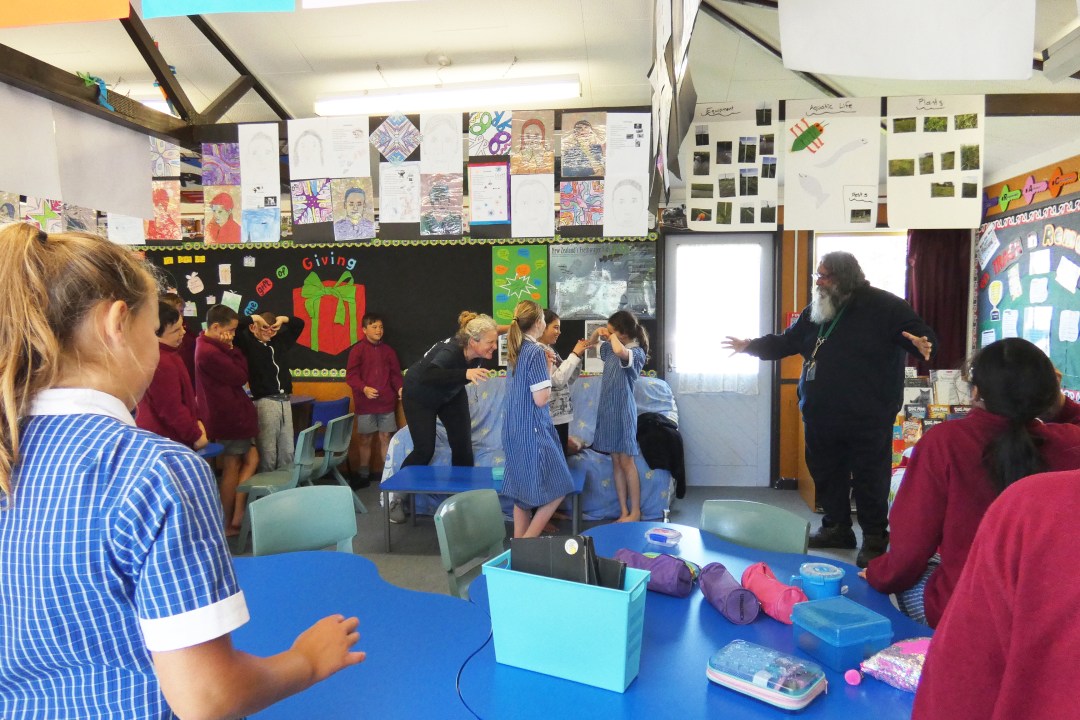
Thursday 25 October started out with high winds and some glimmers of sunshine in between looming clouds. The students had been looking forward to this outing for so long. And it seemed a shame to waste the opportunity to explore the stream in the company of Zoe Studd, Joseph Potangaroa, Ra Smith, Hamish Donald and Hamish Fenwick, all whom had agreed to come down to the site especially on this day to share their knowledge about the freshwater critters, eels, stories of the stream and the Wairarapa waters, and how the stream and restoration site has changed over the years.
So the kids and Liz dressed up warm and started the walk down – just as the sky broke and rain started pouring down. In spite of this, spirits were lifted as they came on site and met Zoe and Joseph, who had brought with them a beautiful longfin eel for us to meet.
The students had encountered baby eels in the past, but this whaea tuna was something else and a real inspiration to us all. She stayed calm in a large bucket as we greeted her. Zoe and Joseph told us about her, what to do, and where on her body to gently stroke her, and what to look out for in case she would start feeling distressed. I have to say, her skin was the most silky smooth that I have ever felt – how interesting it was to hear that eels have their scales on the inside as opposed to the outside, and that they can create a layer of slime to help them crawl across land if they need to. We could feel the wrinkles of the long fin eel as she gently curved and curled around in the bucket. A shortfin eel will not have these wrinkles! We also learnt that eels will create bubbles and froth if they feel stressed and this would be a sign for us to stop touching her. I was awestruck, and I think many of the students with me.
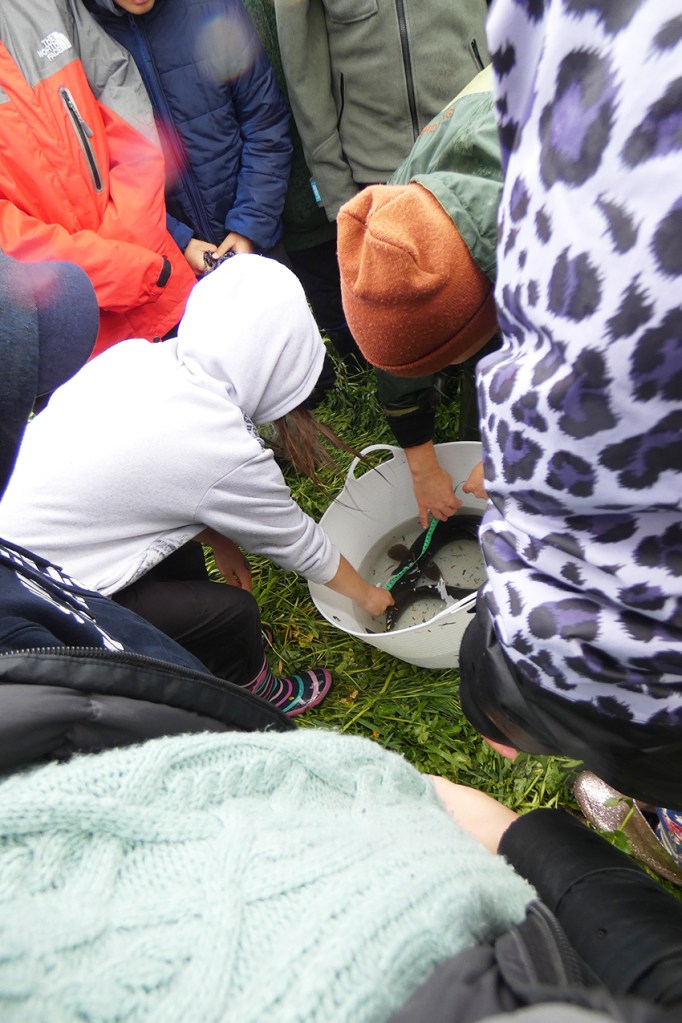
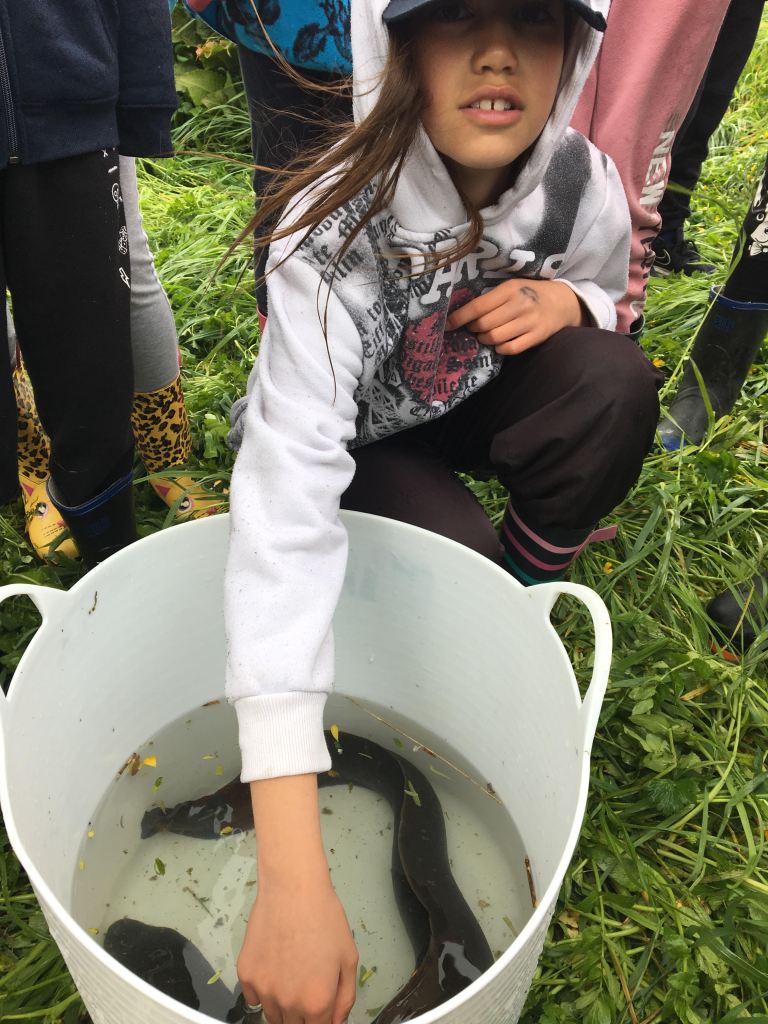
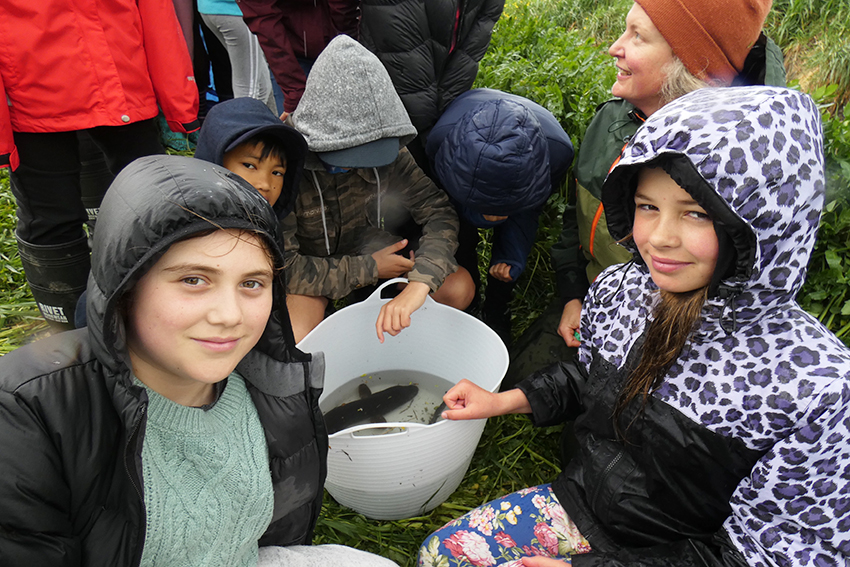
We managed to get about 45 minutes at the creek before it just got too rough and cold, and we decided to head back to the classroom to continue the field day there. Luckily Joseph, Ra and the two Hamishes could all come along, and Zoe brought us a variety of buckets and basins with water samples and macroinvertebrates. Ironically, not long after the sun broke through the skies and the day turned lovely – though windy.
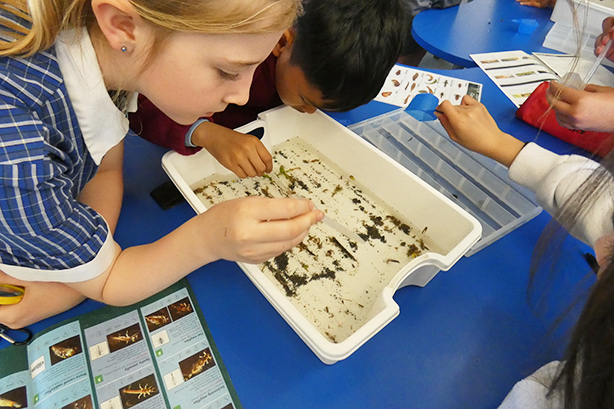
The field-day-come-class-room-freshwater-monitoring was still exciting with calm indoor weather conditions and yummy cookies! The water clarity tube showed that the Donald’s Creek water in the restoration site is very clear. The temperature was a nice cool temperature and the many basins of critters were all pretty chocka with mayflies, dobsonflies, stoneflies, leeches and more.
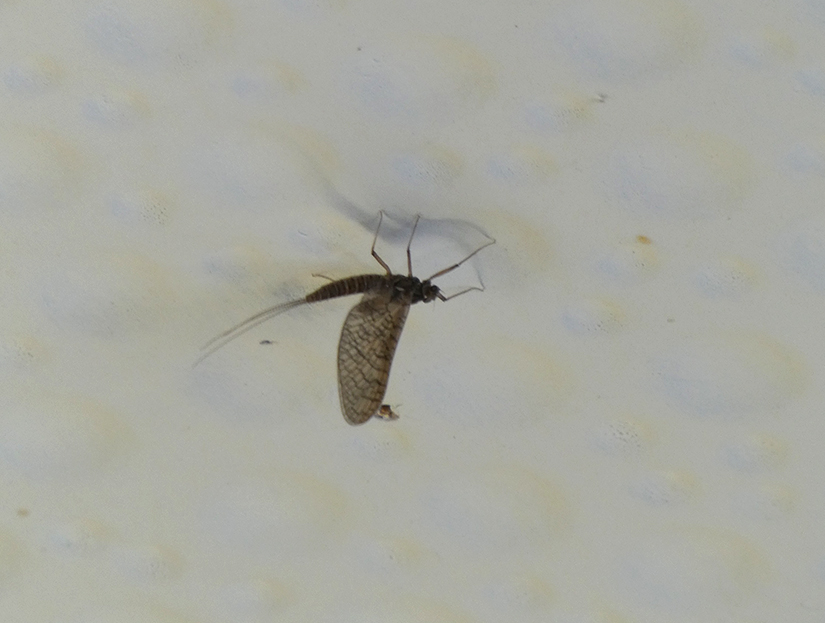
We even spotted an adult mayfly who may have finished its metamorphosis in the classroom, or was about to lay some more eggs (less likely). Either way, it caught a ride in Zoe’s car as she was filling up the trays of water, and was now having a rest on the classroom ceiling!
All in all the stream got a pretty clean bill of health at this stage and this was inspiring and reassuring for the planting work that has been done so far. It is also safe to say that in spite of being a weed, the thick forest of celery-weed edging the stream acts as an important layer of shade, and the watercress below provides plenty of tiny tunnels and hiding spots for critters to thrive. This is helpful while we wait for the toe toe and grasses to grow and create more powerful protection!
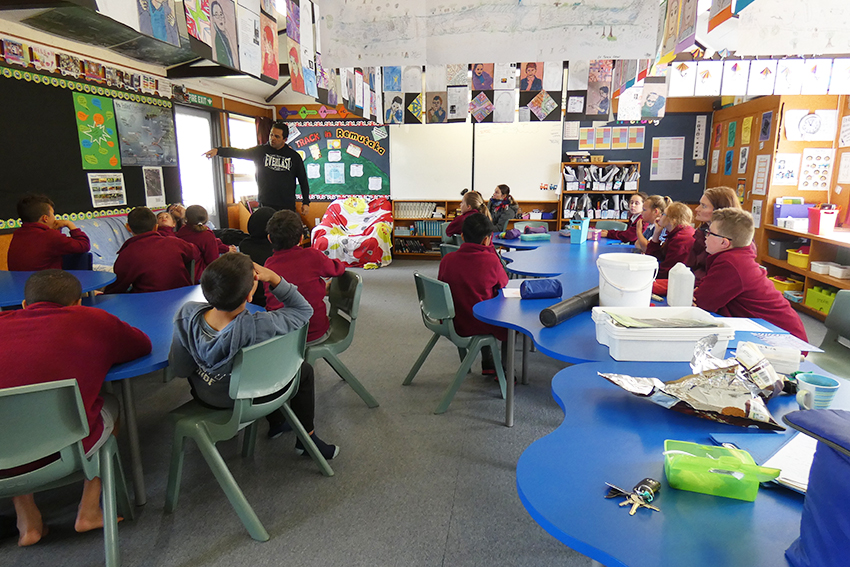
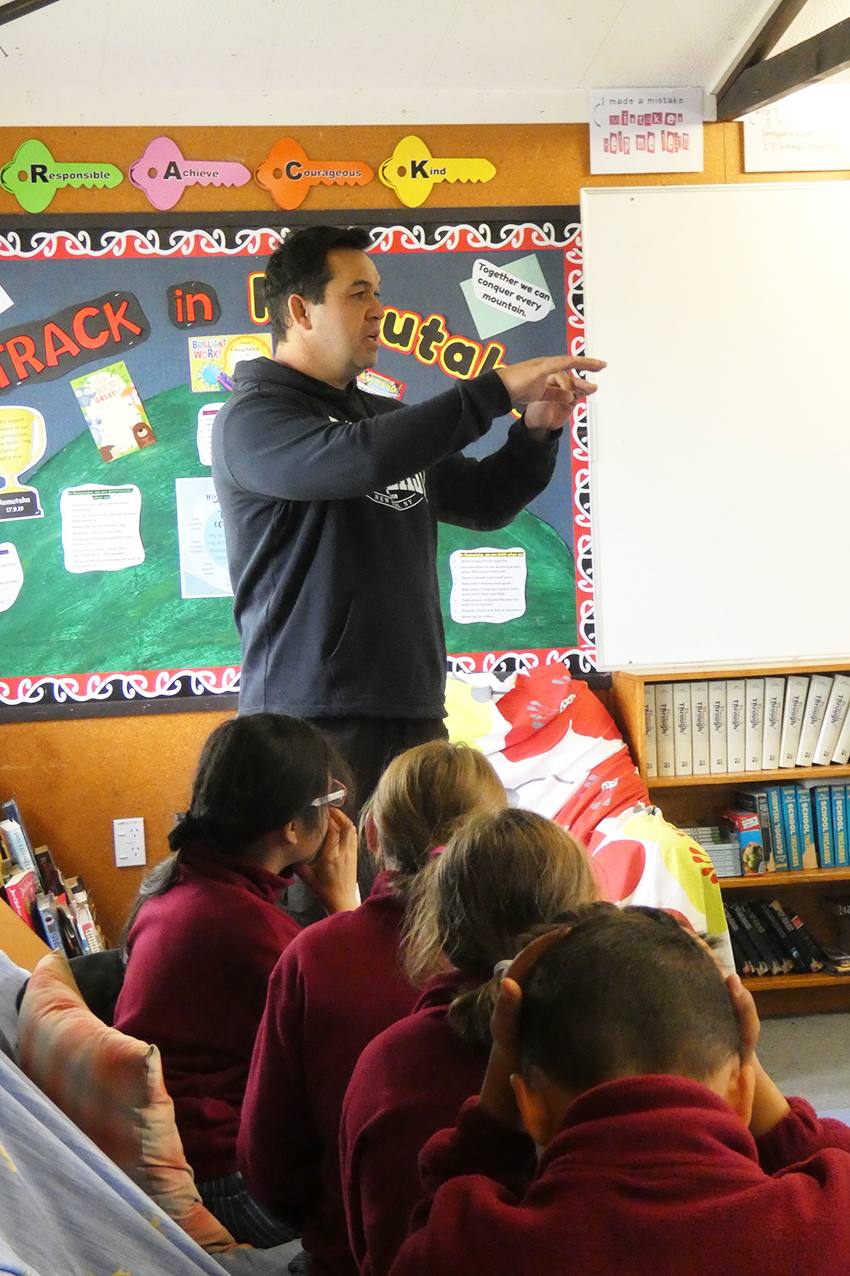
Back in the classroom Joseph took the students on the eels’ journey where they not only travels thousands of kilometres twice in their lives, but also change from saltwater creatures to freshwater, and back to saltwater creatures again! In other words, these are the real deal superheroes with real super powers! No more Batman or even Aquaman for us, that’s for sure!
Here’s what we found out:
The NZ long fin and short fin eel live in rivers, lakes, and wetlands for most of their lives. The longfin eel, or tuna as it’s called, can live to the ripe old age of 80 years before it travels 5000km to the South Pacific near Tonga to breed – and there it dies. The tiny fertilised eggs then start the long journey back to New Zealand – they float on ocean currents for about 15 months until they reach New Zealand shores. Just off the coast of New Zealand they turn into glass eels, little leaflike creatures, and they start changing their organs to be able to adjust to life as freshwater creatures and also be able to survive outside the water. Did you know they are able to travel overland for up to 2 days by breathing through their skin! As they journey up the streams of New Zealand they turn into elvers and then eels and they find their way back to where the forefathers and mothers had once lived.
The eels have extraordinary sense of smell – only second to dogs – and use this to hunt. Joseph also shared with us another “superpower” that eels have – to find out more, be sure to come along to the Donald’s Creek Community Event on 30 November!
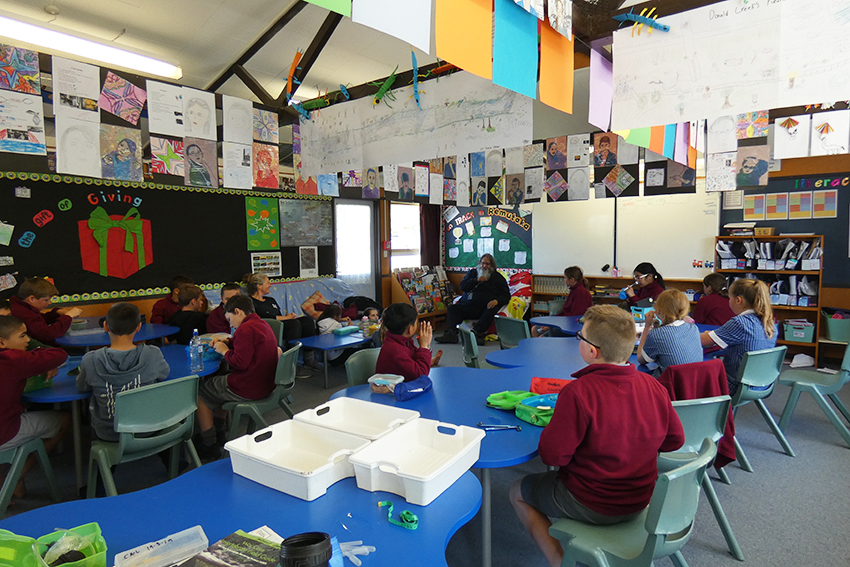
Ra Smith told us that the oldest eel that we know of in New Zealand, lived till 105 years old! It was 1.7meters long, an extraordinary creature. I have heard stories about the Wairarapa waters having so many eels in them that sometimes you could hear them, from fields away, as they were gathering in rivers or trying to swim and climb up waterfalls. Imagine this, imagine how much has changed as we are now struggling to ensure that our streams are healthy enough to hold macroinvertebrates and be cool and clean enough to also provide a healthy habitat for the eels to return and flourish.
Ra told us about eels being a taonga for the people of the Wairarapa, an integral part of our waterways, and being both feared and revered due to its fascinating nature, its “superpowers” and historically as an important source of kai.
A whakataukī goes like so: “There are many eels, but there are also many logs”, and likened the eel to a taniwha, which could also be seen as a protector of the stream. Ra spoke inspired us all to be taniwhas of the stream – protecting it from pests and pollutants, and making good decisions about the future of our waters. He got us thinking about what a taniwha might look like, and do.
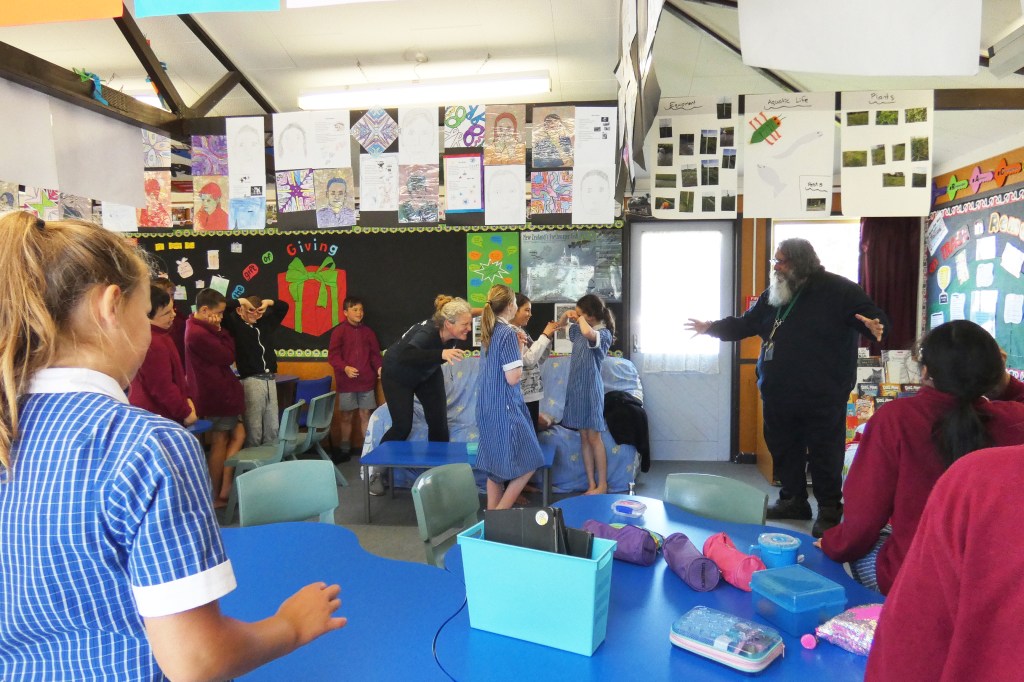
Another whakataukī that I have since come across liken their nature and ability to slip away to something that is important but cannot be obtained.
Ko Tangaroa ara rau
Kua kaheko te tuna i roto i aku ringa
Tangaroa of many paths
The eel has slipped through my hands
We got the same sense when we met the whaea eel that morning, we were meeting someone important, someone who is a protector, someone who is wise – this eel would know intimately how the Wairarapa waters have changed over the past 50 years.
This field day also brought us new revelations of the name and previous paths of the stream, something we will revisit in the next blogpost – and that you will be sure to find out more about at the Donald’s Creek Community Event on 30 November! So keep your superpowers turned on – your ears and eyes peeled for more news!


