Here’s where the fun starts for me. I want to get to know the stream. I am curious to see how the plants are doing – these are the sedge grasses and toetoe that the students from St Teresa’s planted a week ago. I know that the students have spent a lot of time getting to know the stream; they have visited, researched, planned for its future, collected data and monitored the stream, and now started the planting. Have a look here to see the students’ vision for the future of the stream! I can’t wait to meet with the students are hear more about this plan!
So I will put on my gumboots (with reindeers on) and go over to the Donald’s Creek Restoration site every Wednesday morning from now on. I will record my findings, take photos and spend some time blogging about what I have learnt, so that the local community can also learn more about the project and the awesome mahi of the students.
I will meet with the students to learn about their journey and their hopes and plans for the stream. I also hope to meet with other community members who may know the stream in other ways; perhaps they lived by the stream or remember playing in the stream when they were young, perhaps they caught kai from the stream, or they remember how it may have changed over time. I will post about this and share my experiences on this blog.
Over time I will put together a small “science kit” for this purpose, but today I start light, bringing my camera and a few measuring tools. Also warm clothing – it is freezing today, and I am layered up to the max, a mixture of sun, ice cold wind and drops of rain is on the menu.
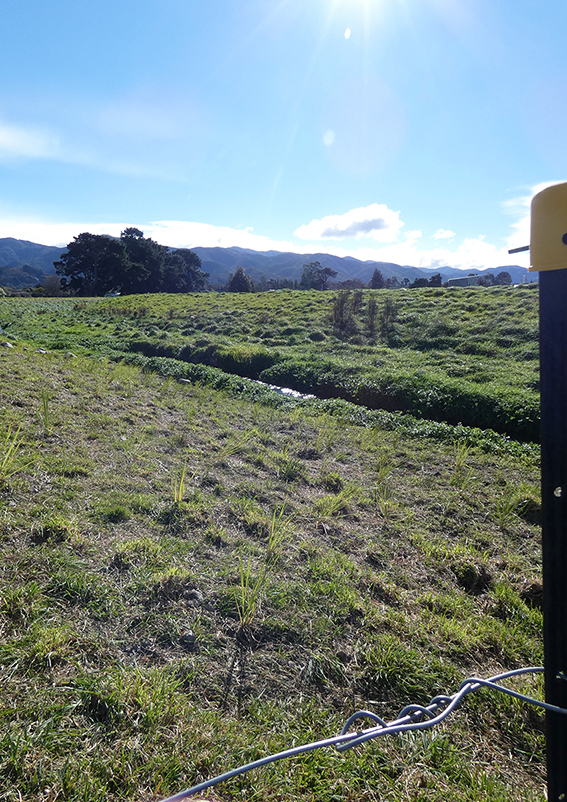
Today I want to measure the temperature of the stream at the site, and the depth of the stream. I also want to record how the plants that the St Teresa Students planted last week are doing. Too nerdy? Well, hey, that way perhaps I can even do a rough monitoring of how the plants grow and thrive. As I walk onto the site, at first glance I can see a few iron rods and a rope marking and protecting the area where the sedges and toetoe were planted. This is a good first step (thanks City Care and SWDC) to ensuring that no-one will trample across the plants, or mow them down.

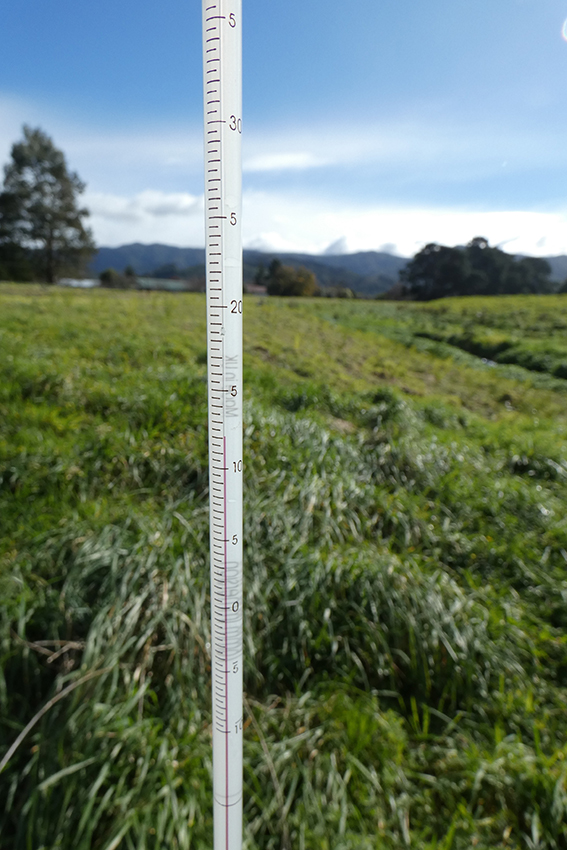
just over 12 degrees Celcius!
Measuring the temperature can tell you a lot about the stream. The temperature of a stream affects the level of oxygen that fish and macro-invertebrates need to survive, the photosynthesis of aquatic plants in the stream, and vulnerability to pollution, parasites and disease. Of course the temperature of the stream may vary as you wander further upstream and downstream, so key to getting good data is to always take your measurements at the same spot every time. I get approximately 12.2 degrees Celsius. I wait for a bit and take the measurement again, as this is the first time and I am not sure if I am doing this right. To eliminate mistakes it’s best to compare two separate measurements. Both measurements come up the same. I double-check that the thermometer is working by holding the tip of the Thermometer in my hand for a while – it goes up.
So not a great day for a swim for me, but I imagine 12.2 degrees C may be pretty ideal for a eel or a kokopu. I will need to find out! This reading is taken in the middle of Winter – and this makes me wonder what temperatures this stream will have during Summer, with so little shade, and how that may impact on oxygen levels for fish and macro-invertebrates. The planting that the students have done is a great step in the right direction to provide more shade, shelter and cooler temperatures especially in Summer!
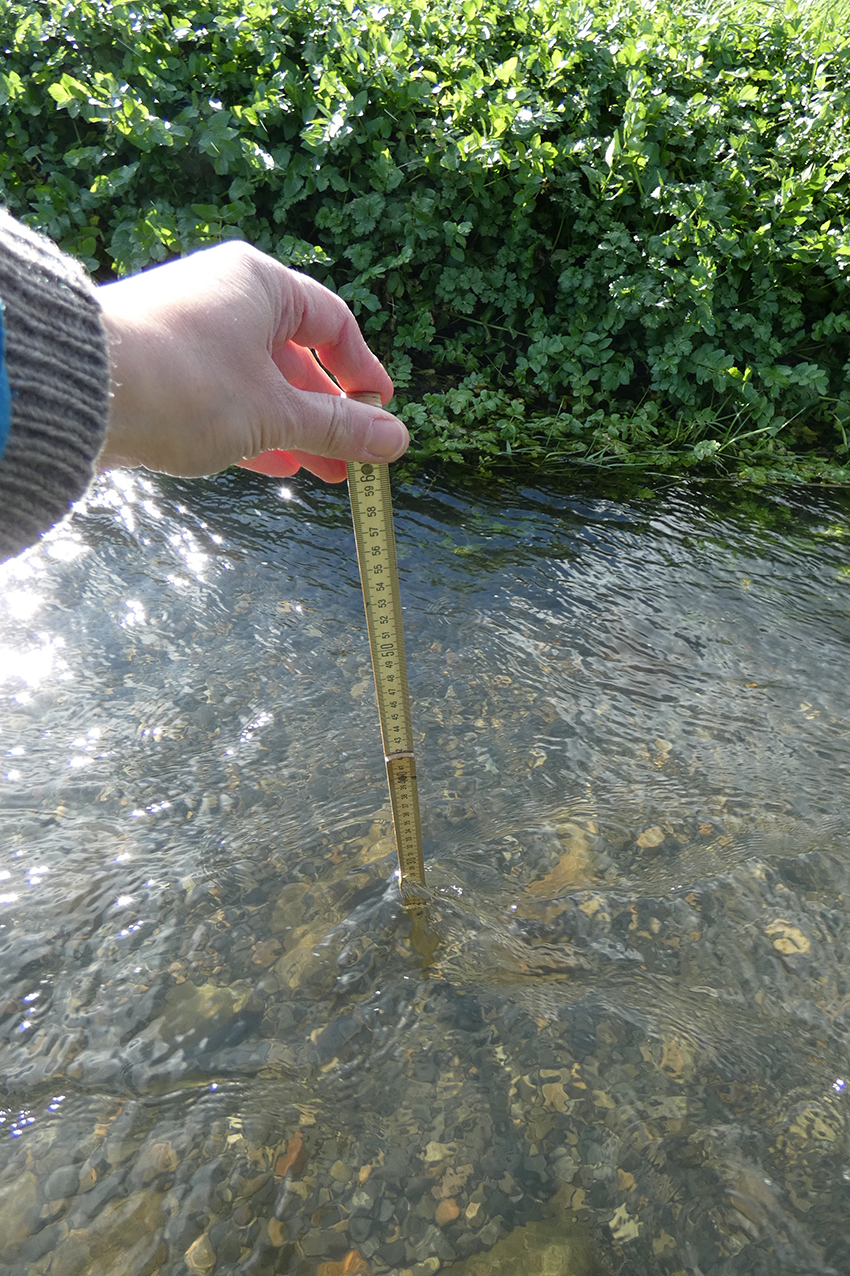
Next I measure the depth of the stream, using a good old fashioned wooden fold out carpenter’s ruler. I get roughly 27cm. The water is travelling at high velocity, it would be fun to find out how fast – but I have not got the means to measure this today. I wonder how this velocity and the lack of shade affects the health of the stream ecosystem. I look forward to being able to meet the students and ask them about this and hear what they have learnt. For now, all I can think is that it can’t be easy for all the little critters in the stream to thrive in such rapidly flowing water and with so little shade. I wonder if the stream has always been this straight, and how a more meandering and more shaded stream would have supported a thriving ecosystem for eels, koura, kokopu and other species.
Last thing on my agenda today is to take a couple of measurements of a few plants that I know I can locate and measure again at regular intervals. I don’t yet know which plants are which… so I will need to return with someone that knows, who can help identify them. Windy weather conditions also made it pretty tricky to measure the height of the plants, but the longest parts of the plants seemed to be around 40-45cm.
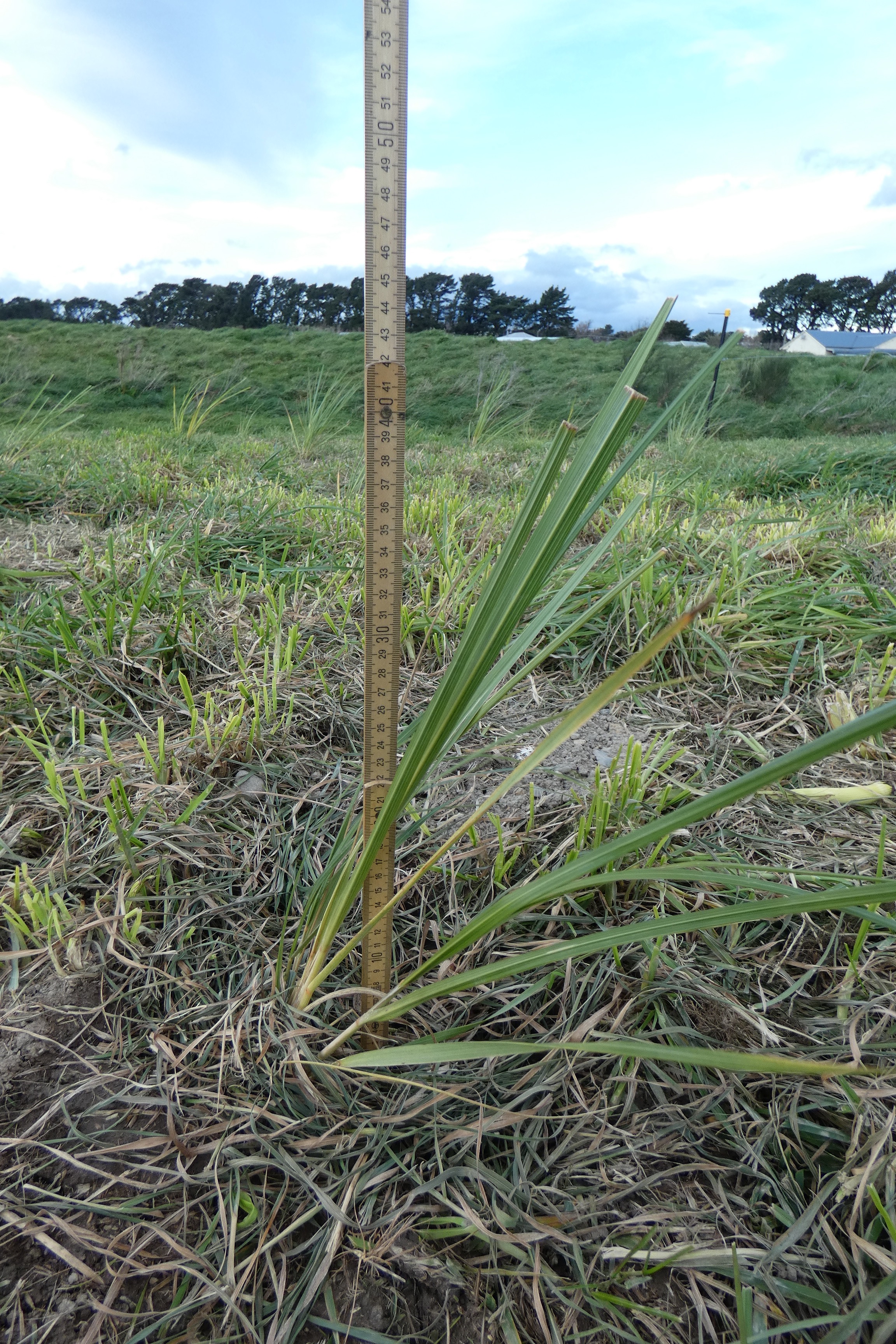
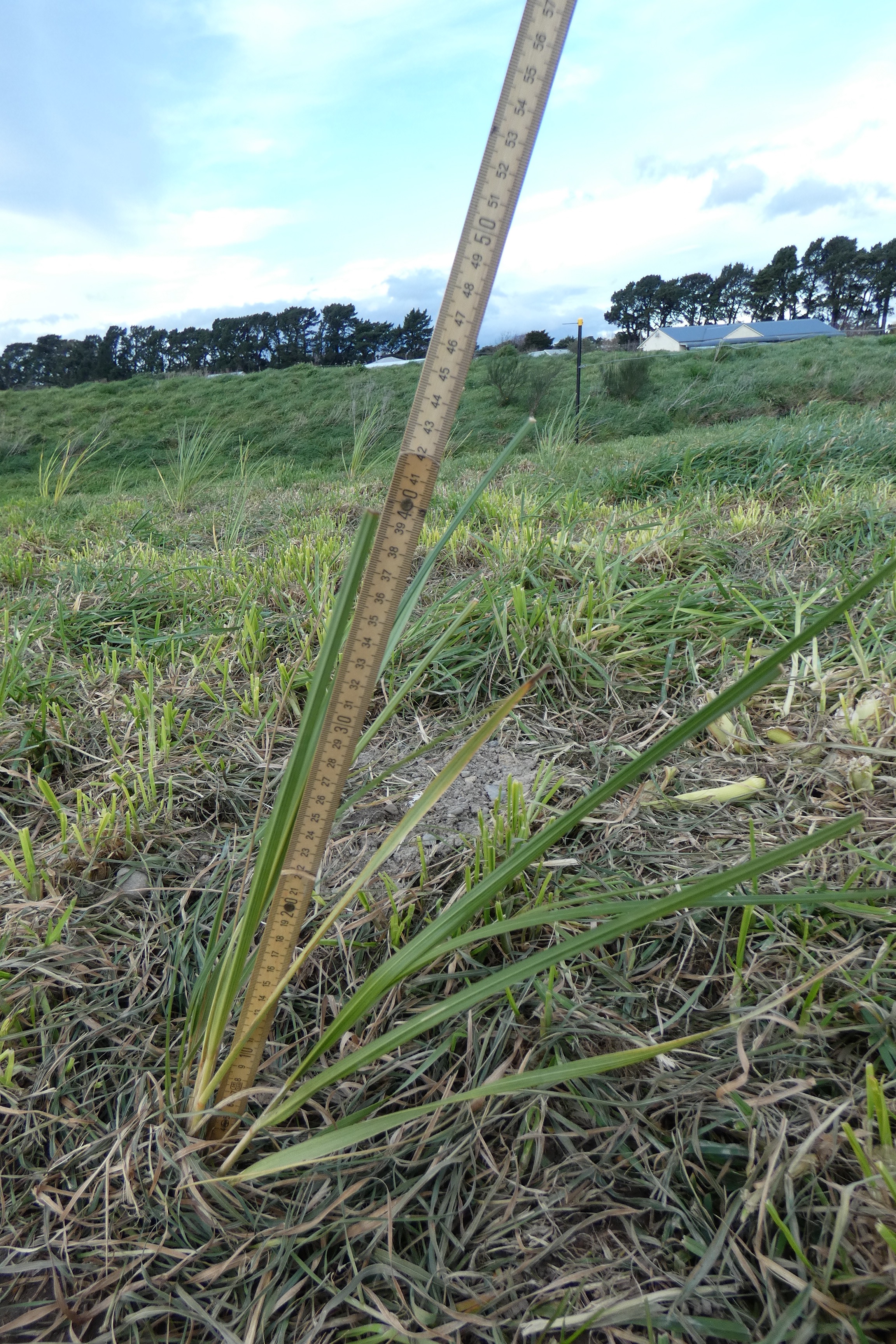
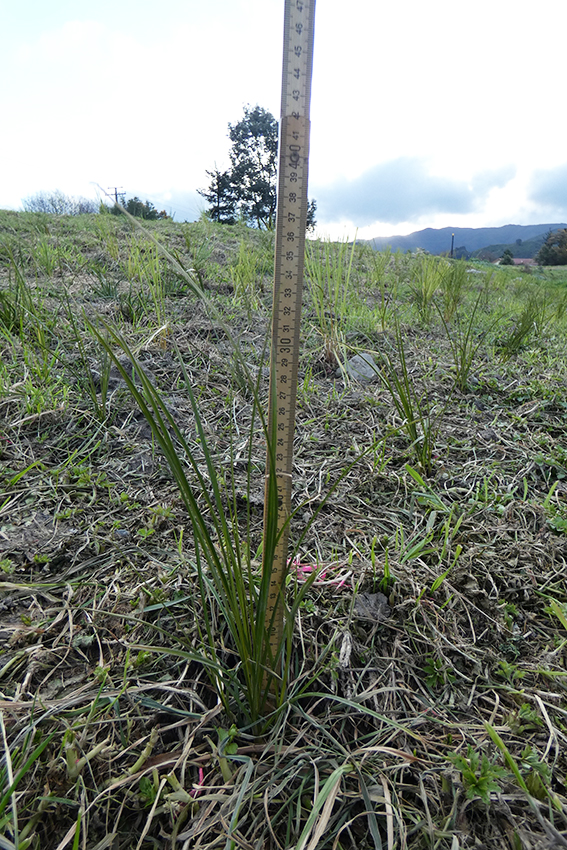
The site visit and measurements were done 07.07.2019.

 Donald's Creek Kaitiakitanga Project